The fastest way to annotate computer vision datasets
Smart annotation, dataset management, and built-in analytics. Go from raw data to training, all in one place.
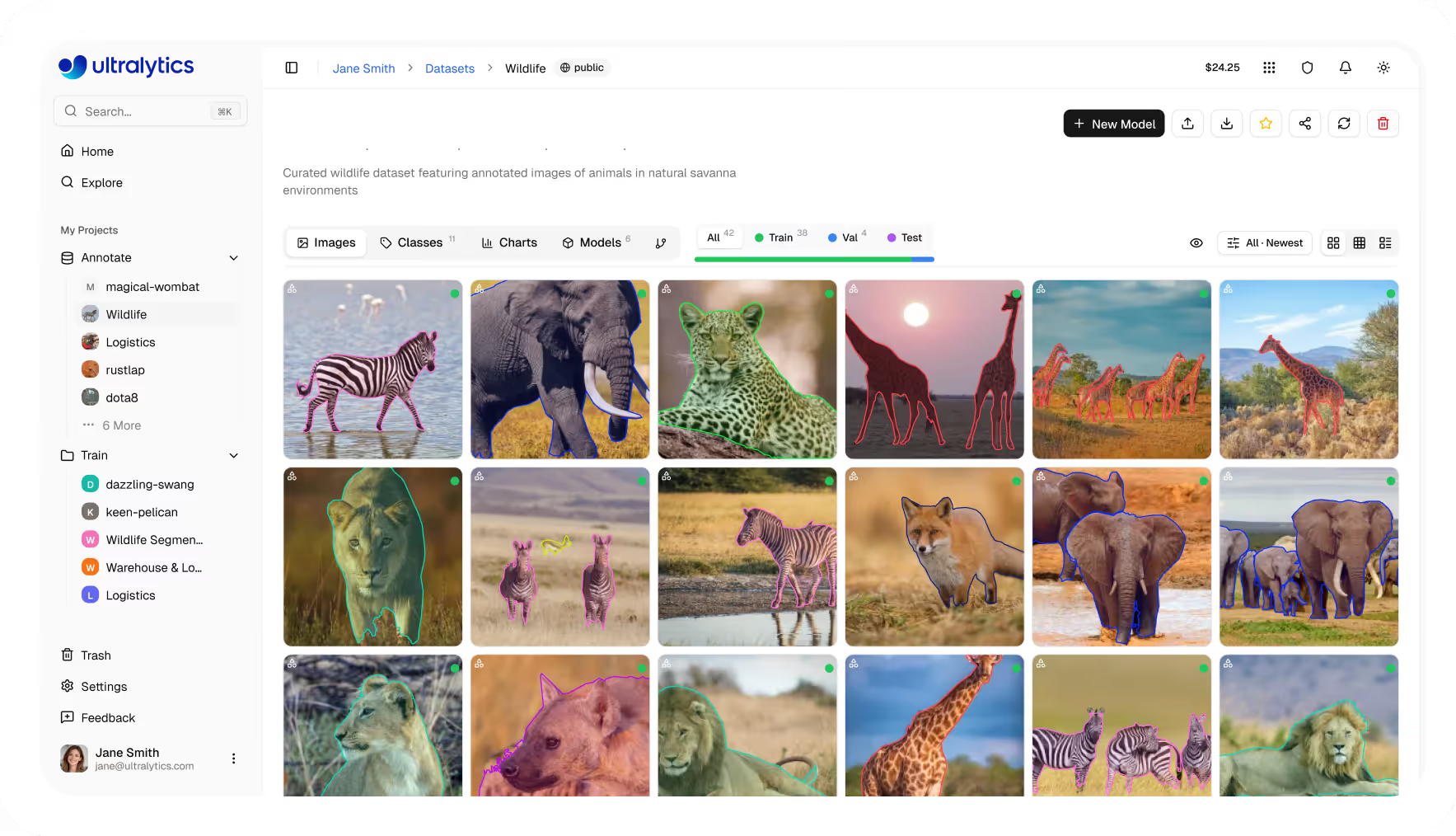
Built on production-scale annotation
Ultralytics Platform helps teams turn large visual datasets into training-ready annotations with speed, consistency, and reviewable quality.
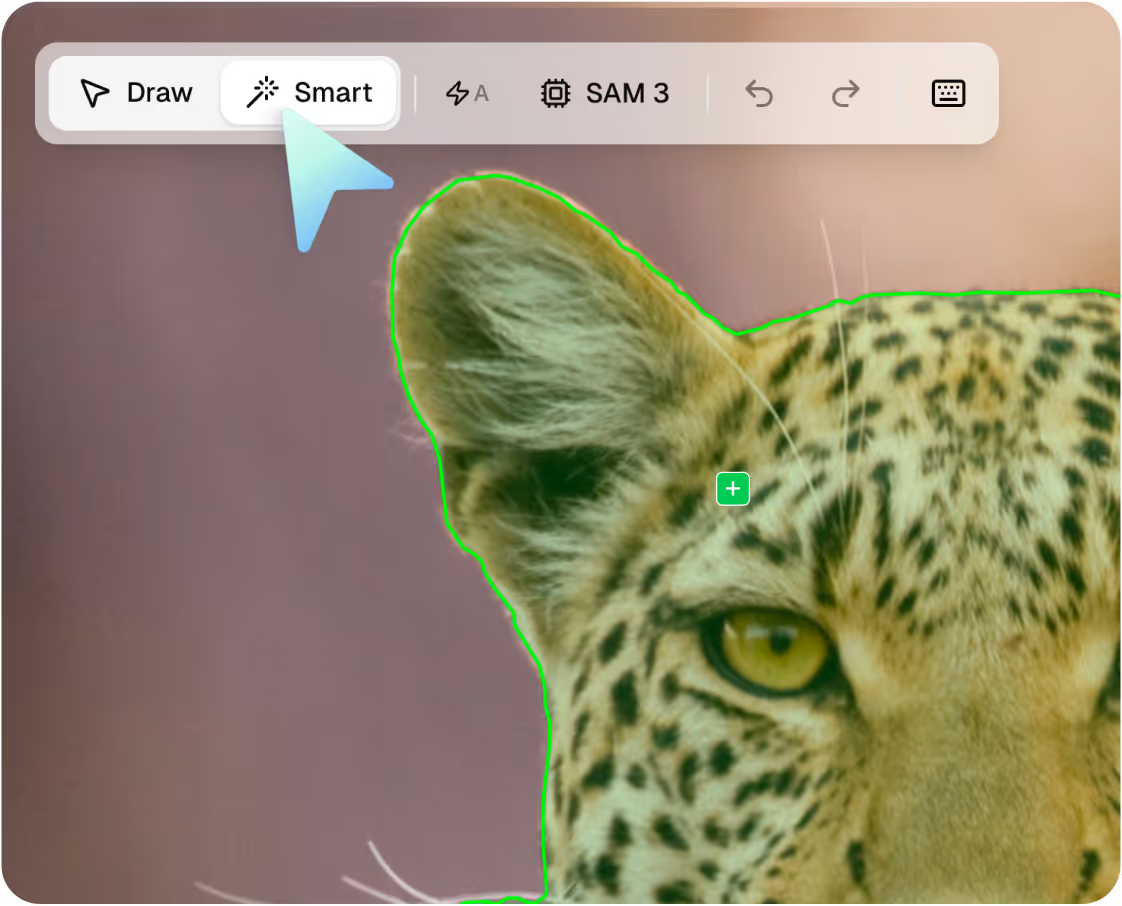
Label up to 10x faster with smart annotation
Ultralytics Platform gives you the image annotation tool to build high-quality datasets faster. From smart annotation to precise manual editing, these features are designed to reduce image labeling time without sacrificing quality.
- SAM-powered smart annotation: Masks and bounding boxes in one click.
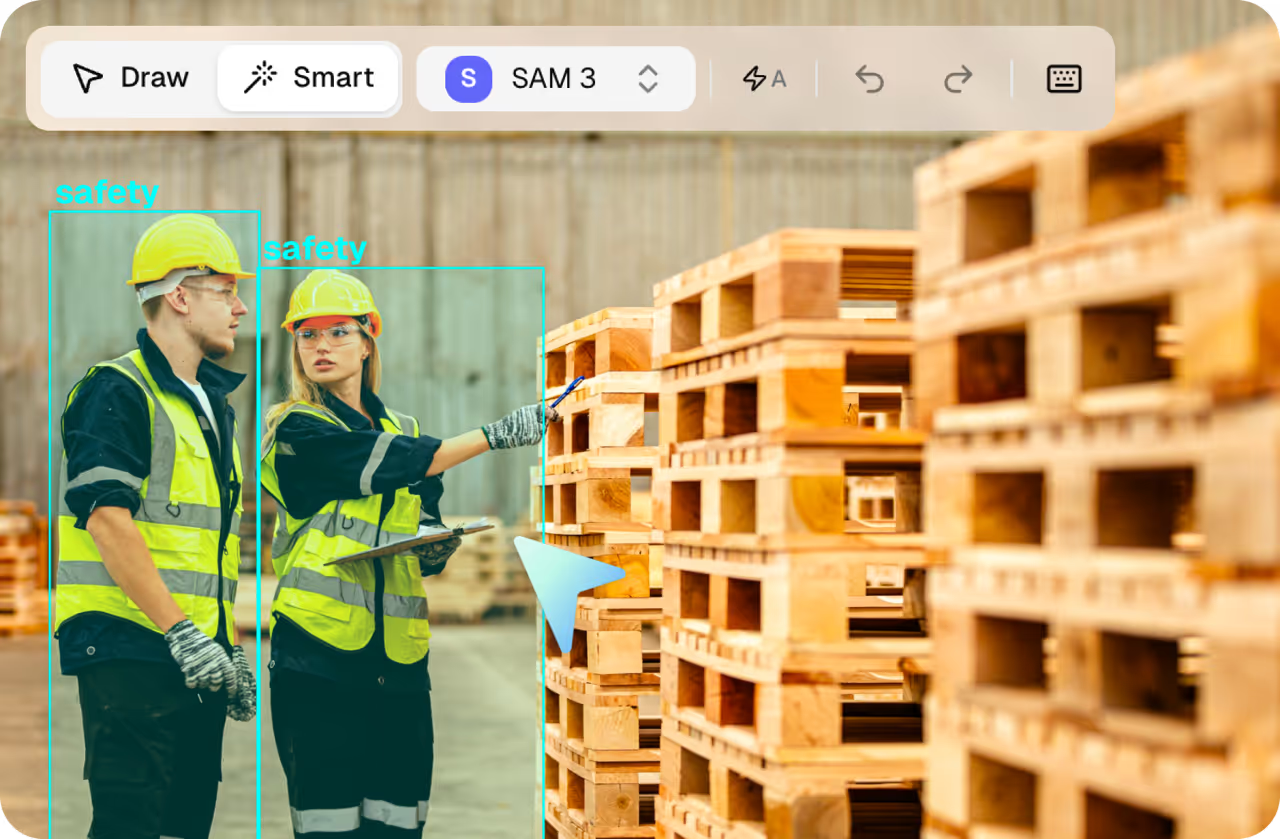
- Full AI task coverage: Detection, instance segmentation, semantic segmentation, classification, pose, OBB.
- Universal format support: Your choice of YOLO, COCO, VOC, and more.
- Team review and versioning: Clear collaboration at every step.
One platform for every vision task
Ultralytics Platform natively supports all 6 annotation tasks needed to build production-ready vision AI.
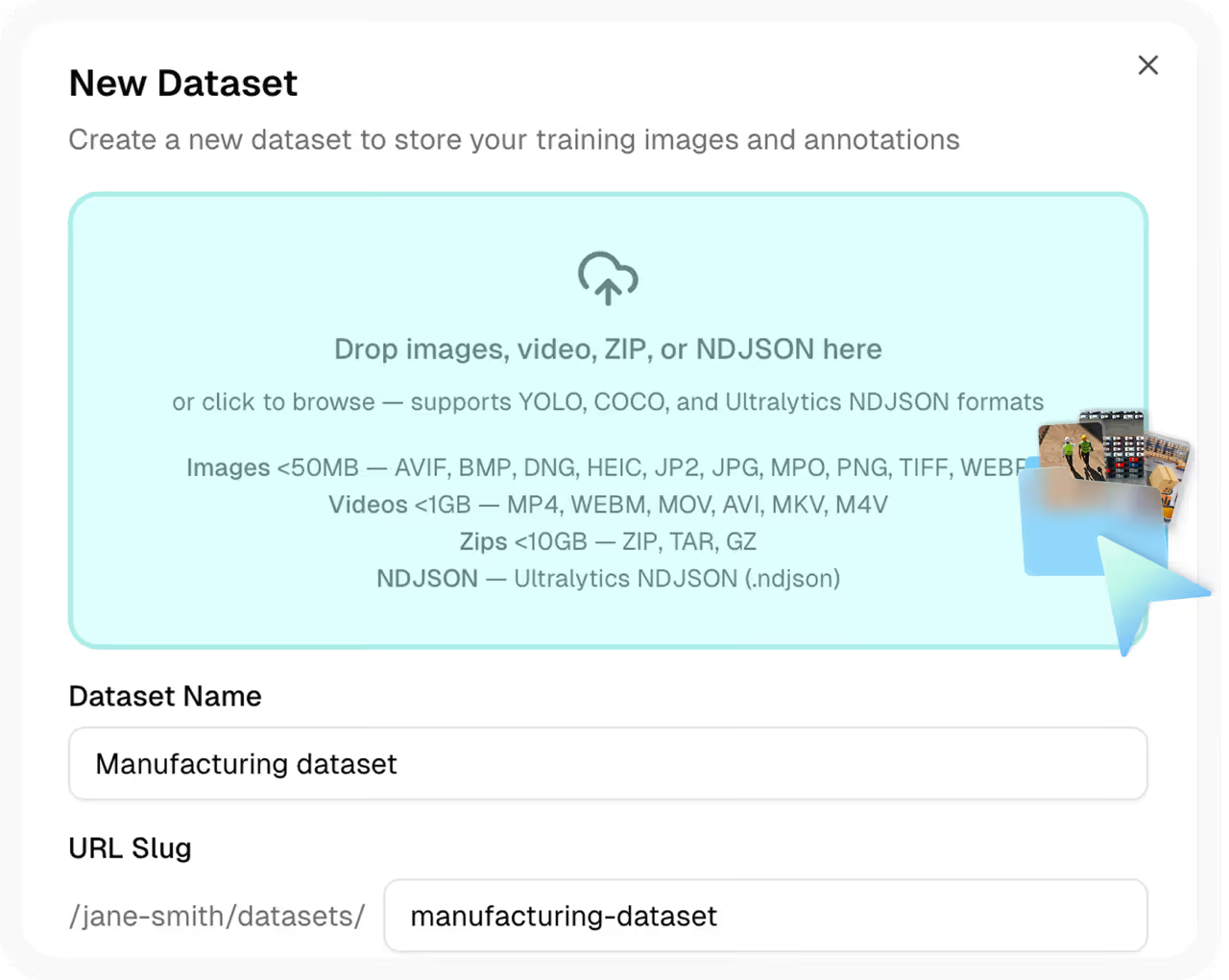
Any format, any size, in just one click
Upload images, videos, or ZIP archives. Import YOLO or COCO datasets, or start from raw images. Your data is ready to annotate in seconds.
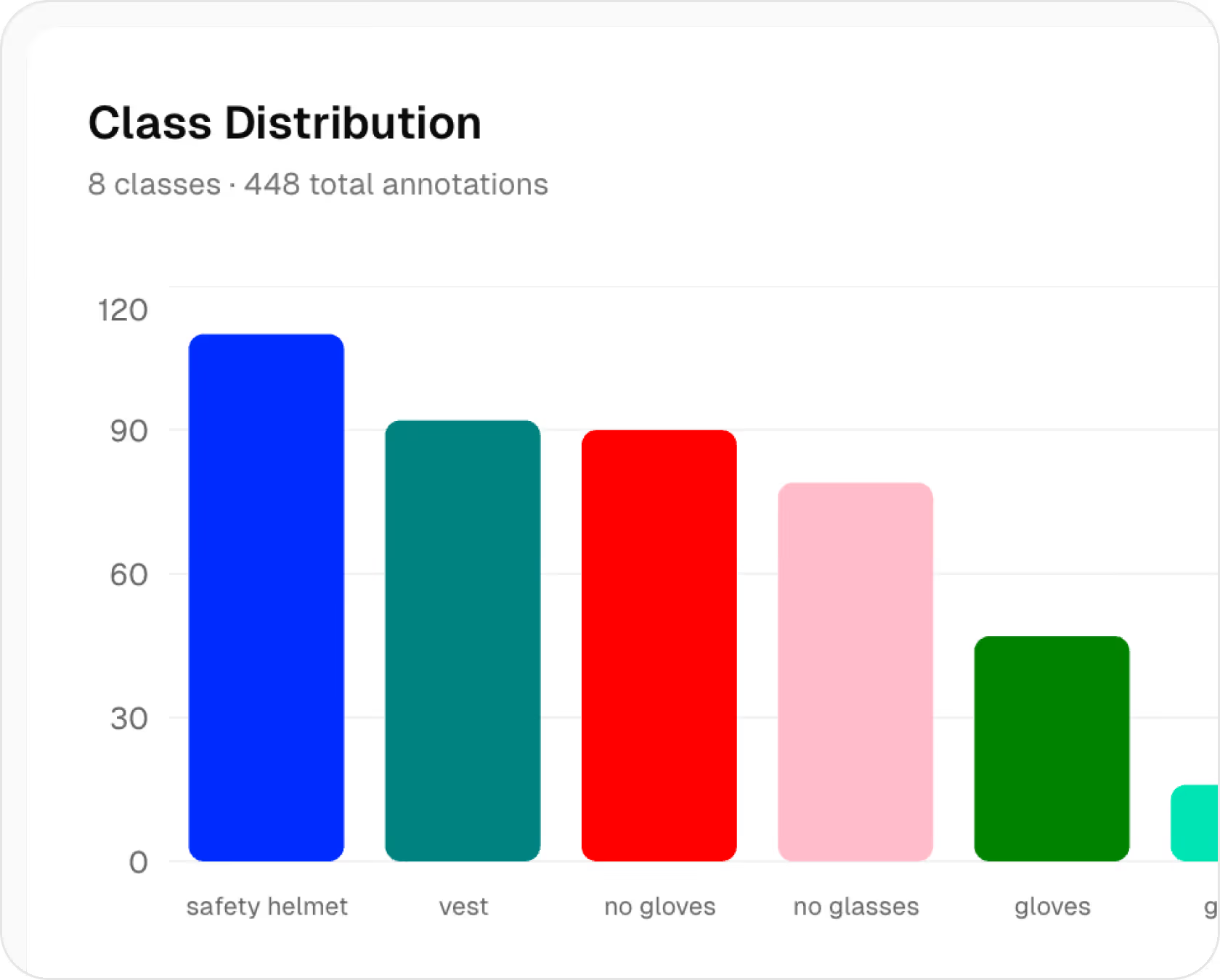
Analyze your data before you train
Know your datasets inside out. Class distributions, split imbalances, annotation heatmaps, and image dimensions, all in one place, and always up to date.

Built for team collaboration
Manage workflows, assign roles, track contributions, and keep projects organized as your team and datasets scale.
See how annotation works
Watch how to upload your data, label it with smart annotation, and build a training-ready dataset, all within Ultralytics Platform.
Done annotating? Start training.
Choose a YOLO model, select a GPU, and start training in one click.
Explore industry solutions
See how teams apply Ultralytics computer vision across production environments.
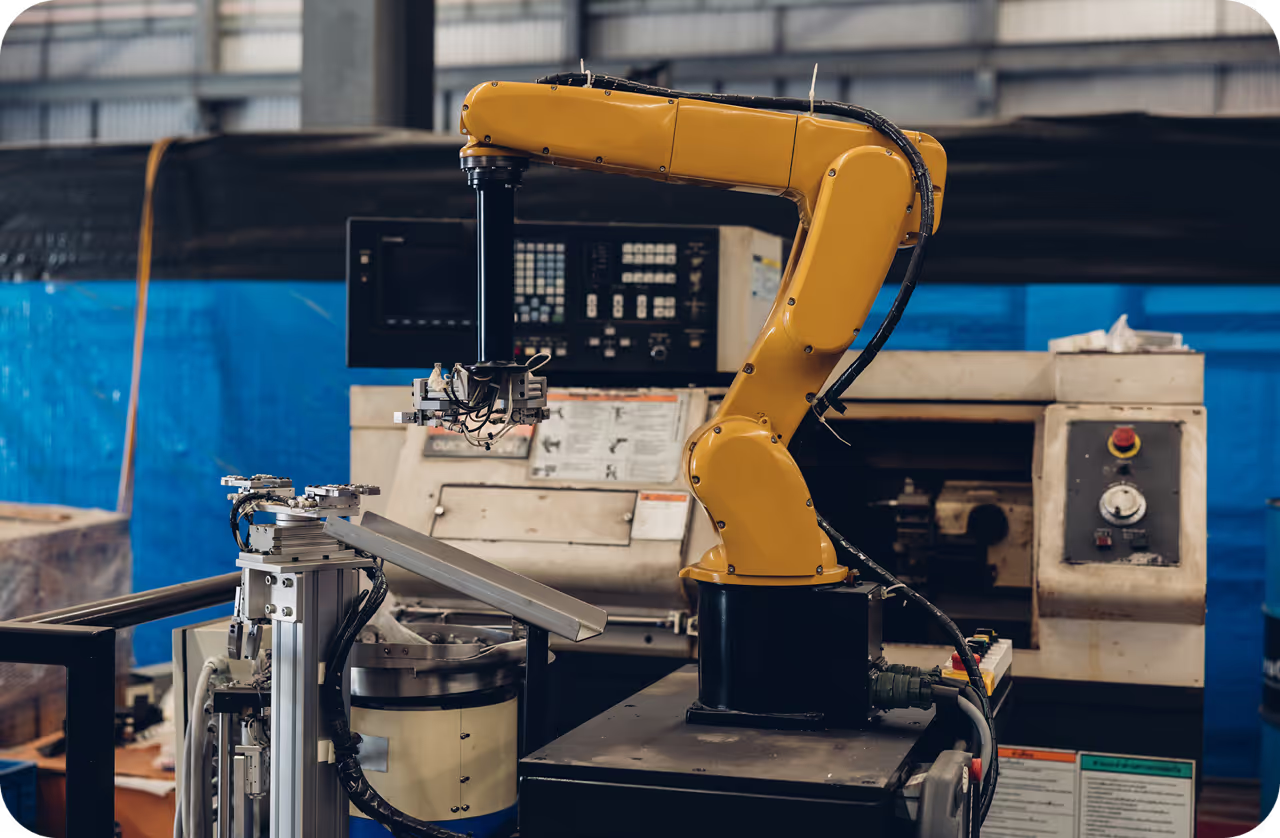
AI in Robotics
Power smarter machines with Ultralytics YOLO models. Vision AI in robotics drives autonomous navigation, perception, object tracking, and real-time control.
Learn more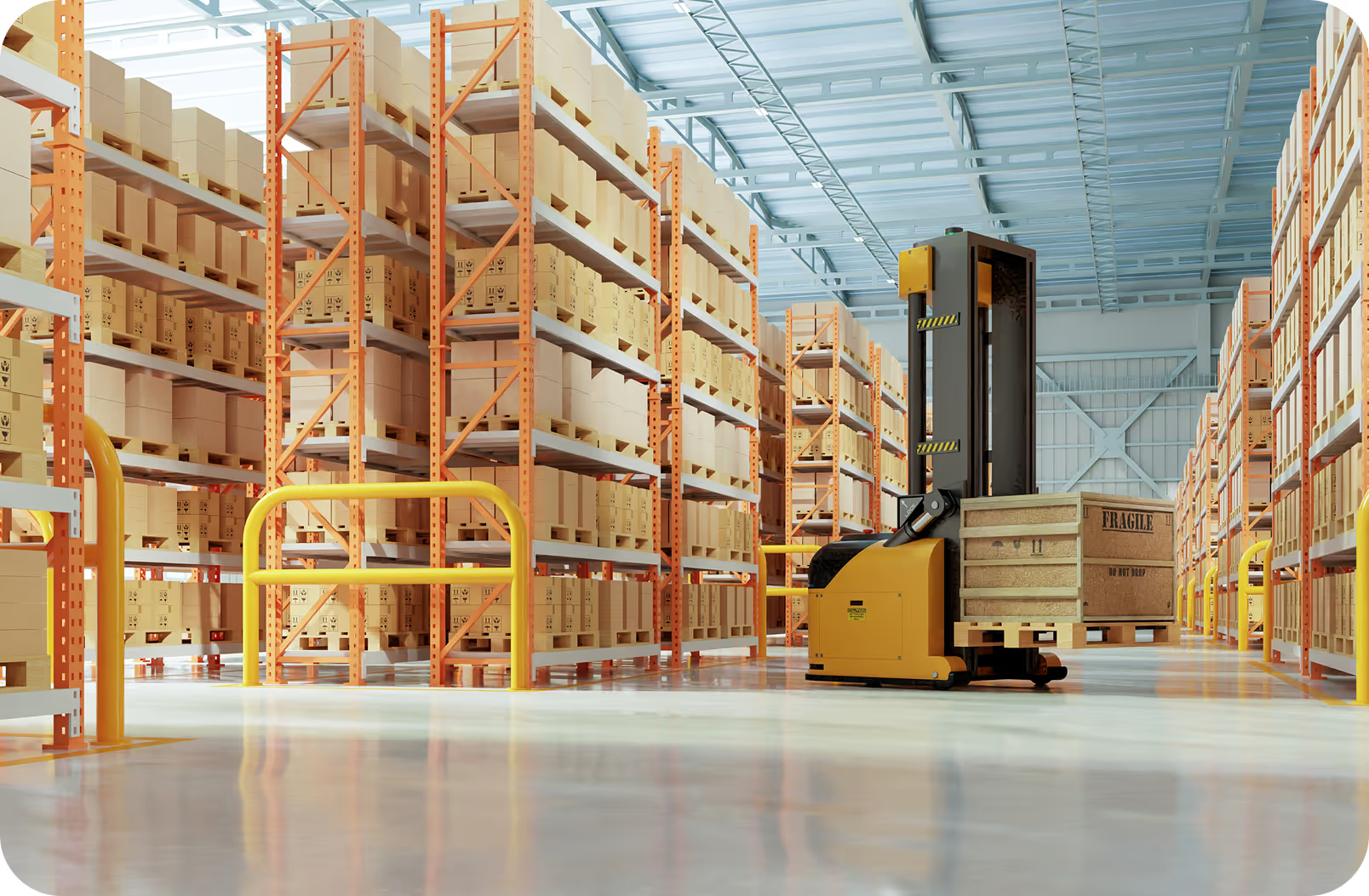
AI in Logistics
Streamline logistics with Ultralytics YOLO models. Vision AI enables package inspection, sorting, vehicle tracking, and real-time warehouse safety monitoring.
Learn more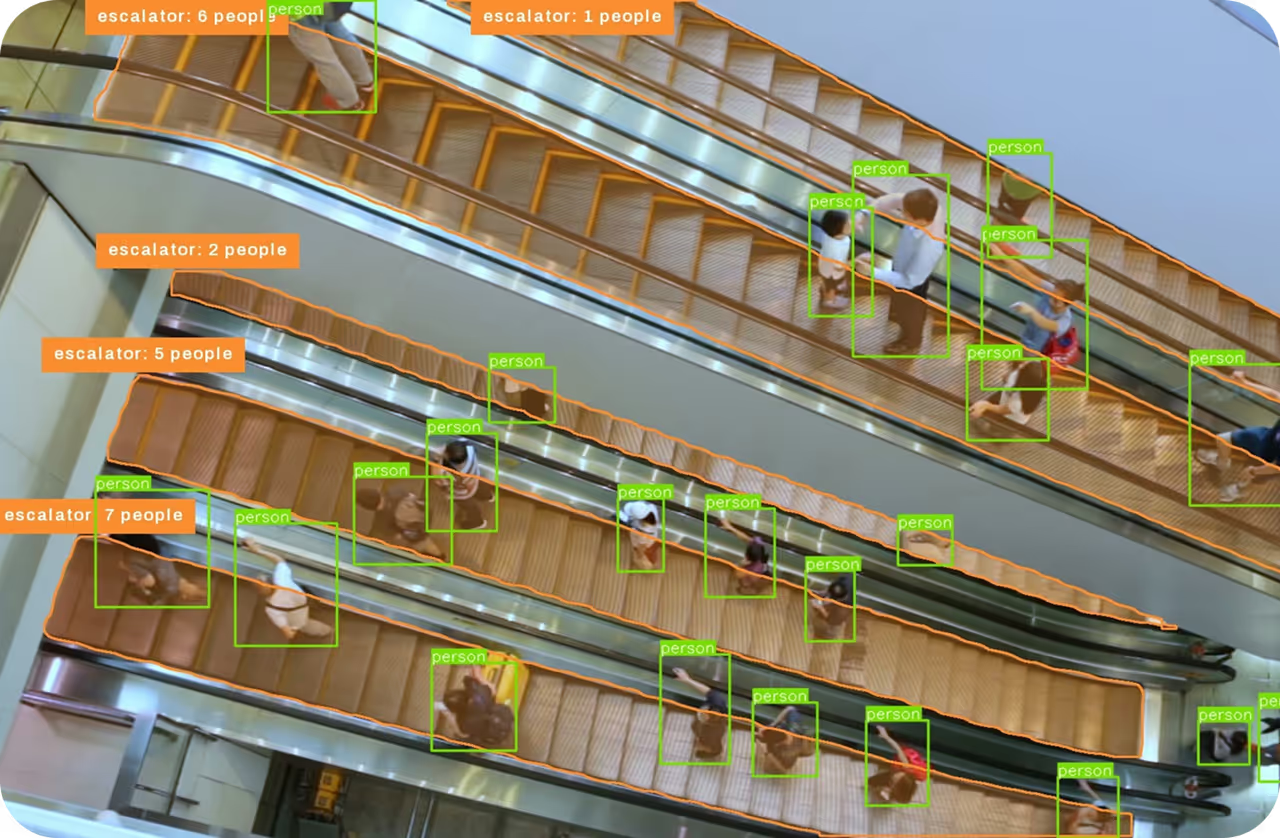
AI in Retail
Reimagine retail with Ultralytics YOLO models. Vision AI powers inventory tracking, shelf monitoring, queue management, and smarter customer insights.
Learn more
AI in Healthcare
Build healthcare solutions with Ultralytics YOLO models. Vision AI in healthcare powers faster medical imaging, smarter diagnostics, and patient monitoring.
Learn more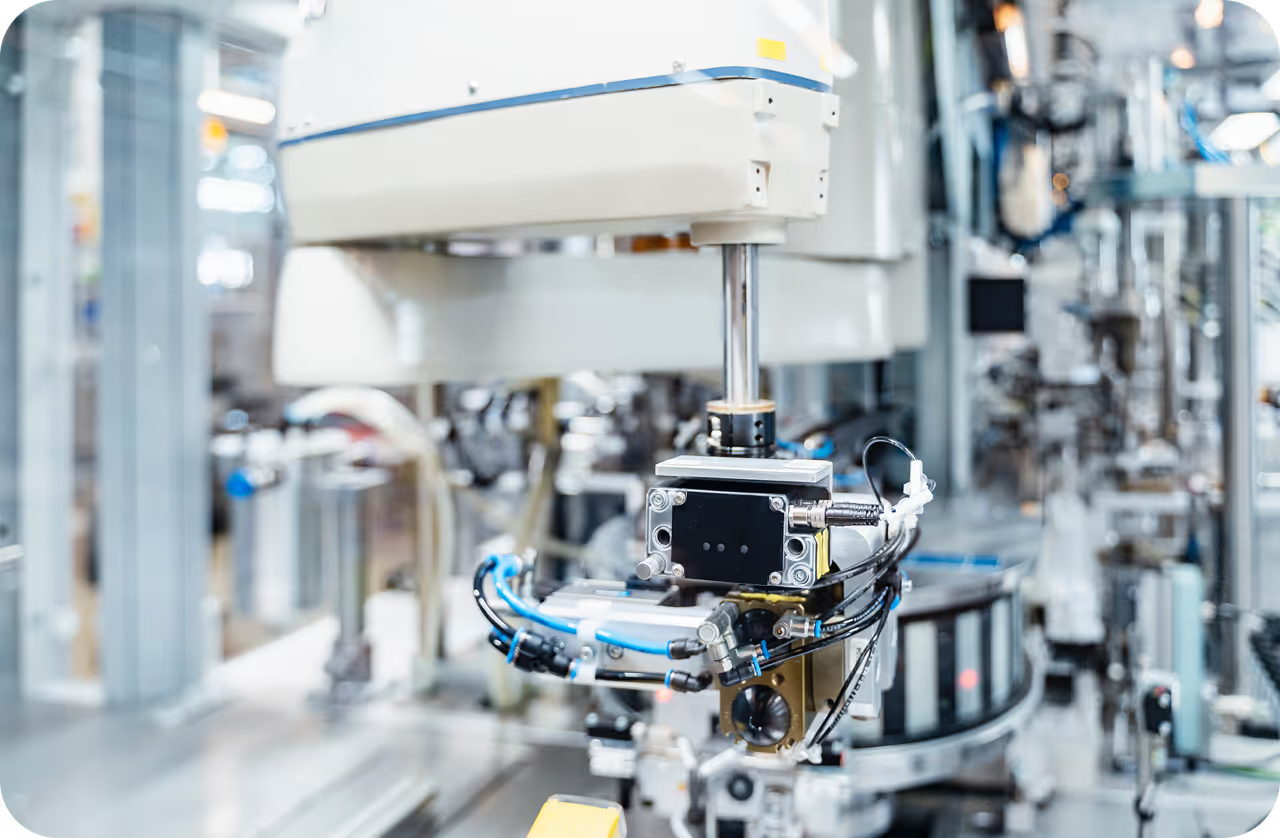
AI in Manufacturing
Optimize manufacturing with Ultralytics YOLO models. Vision AI drives quality control, defect detection, PPE compliance, and assembly line automation.
Learn more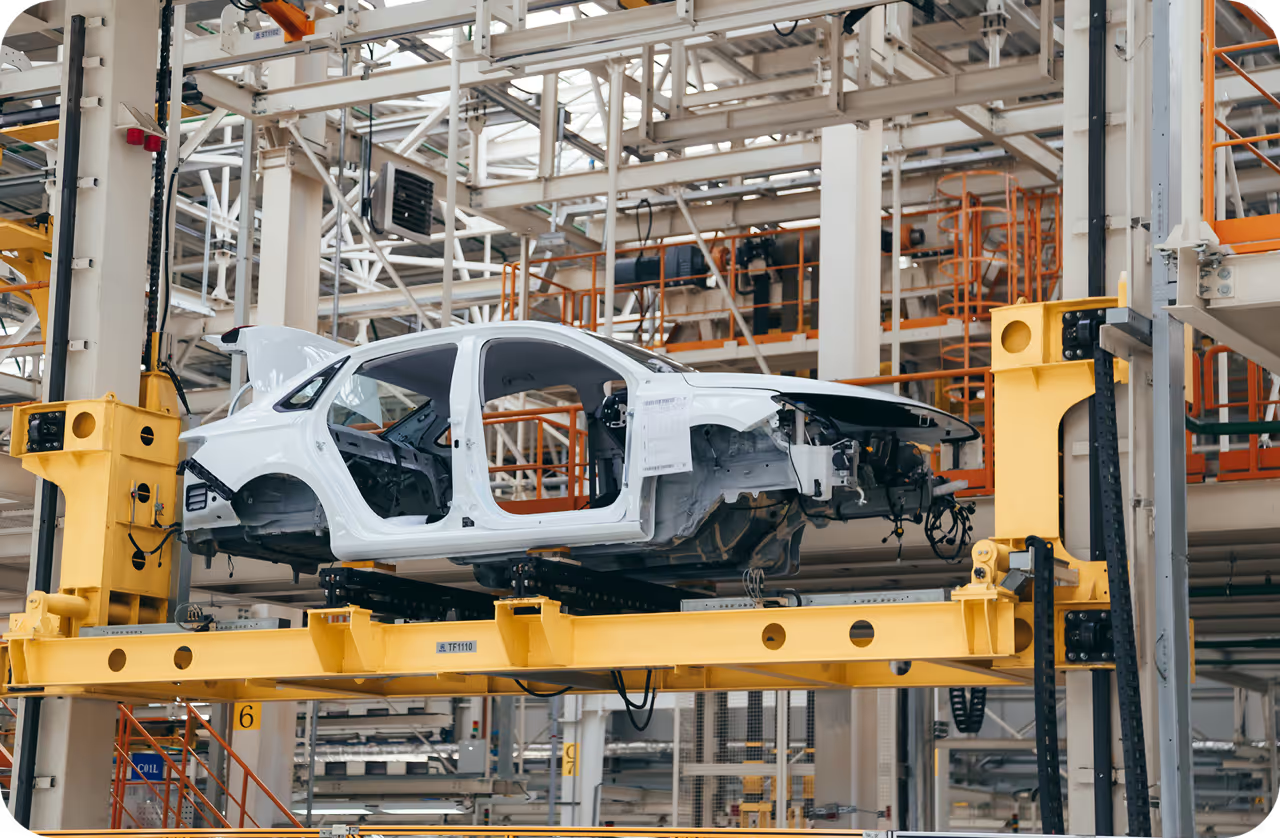
AI in Automotive
Apply computer vision in automotive with Ultralytics YOLO models. Vision AI elevates road safety, driver assistance, and vehicle automation for smarter roads.
Learn more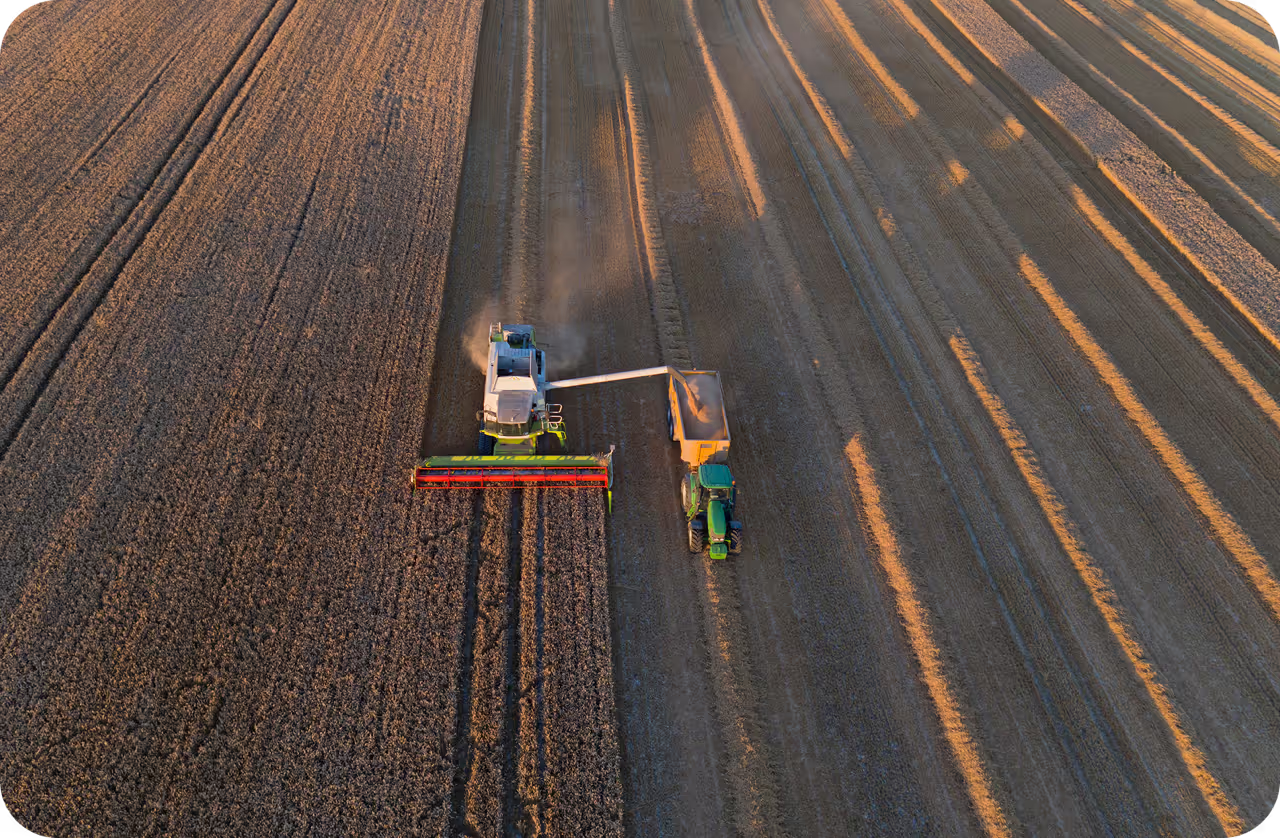
AI in Agriculture
Bring vision AI to smart agriculture with Ultralytics YOLO models. Power crop monitoring, livestock tracking, and precision farming for higher, smarter yields.
Learn moreAI in Robotics
Power smarter machines with Ultralytics YOLO models. Vision AI in robotics drives autonomous navigation, perception, object tracking, and real-time control.
Learn moreAI in Logistics
Streamline logistics with Ultralytics YOLO models. Vision AI enables package inspection, sorting, vehicle tracking, and real-time warehouse safety monitoring.
Learn moreAI in Retail
Reimagine retail with Ultralytics YOLO models. Vision AI powers inventory tracking, shelf monitoring, queue management, and smarter customer insights.
Learn moreAI in Healthcare
Build healthcare solutions with Ultralytics YOLO models. Vision AI in healthcare powers faster medical imaging, smarter diagnostics, and patient monitoring.
Learn moreAI in Manufacturing
Optimize manufacturing with Ultralytics YOLO models. Vision AI drives quality control, defect detection, PPE compliance, and assembly line automation.
Learn moreAI in Automotive
Apply computer vision in automotive with Ultralytics YOLO models. Vision AI elevates road safety, driver assistance, and vehicle automation for smarter roads.
Learn moreAI in Agriculture
Bring vision AI to smart agriculture with Ultralytics YOLO models. Power crop monitoring, livestock tracking, and precision farming for higher, smarter yields.
Learn moreAI in Robotics
Power smarter machines with Ultralytics YOLO models. Vision AI in robotics drives autonomous navigation, perception, object tracking, and real-time control.
Learn moreAI in Logistics
Streamline logistics with Ultralytics YOLO models. Vision AI enables package inspection, sorting, vehicle tracking, and real-time warehouse safety monitoring.
Learn moreAI in Retail
Reimagine retail with Ultralytics YOLO models. Vision AI powers inventory tracking, shelf monitoring, queue management, and smarter customer insights.
Learn moreAI in Healthcare
Build healthcare solutions with Ultralytics YOLO models. Vision AI in healthcare powers faster medical imaging, smarter diagnostics, and patient monitoring.
Learn moreAI in Manufacturing
Optimize manufacturing with Ultralytics YOLO models. Vision AI drives quality control, defect detection, PPE compliance, and assembly line automation.
Learn moreAI in Automotive
Apply computer vision in automotive with Ultralytics YOLO models. Vision AI elevates road safety, driver assistance, and vehicle automation for smarter roads.
Learn moreAI in Agriculture
Bring vision AI to smart agriculture with Ultralytics YOLO models. Power crop monitoring, livestock tracking, and precision farming for higher, smarter yields.
Learn moreFrequently asked questions
Yes. Ultralytics Platform accepts datasets labeled in YOLO and COCO formats, the two most widely used annotation standards in computer vision. If your data was labeled in another tool like CVAT or Roboflow and exported to either format, you can upload it directly and start training immediately.
Computer vision models are trained on labeled datasets, learning to associate visual patterns with the annotation labels in your data. The quality, size, and balance of your training data directly influence how well trained models perform. Ultralytics Platform connects your annotation workflow directly to cloud training with no tool switching required.
Ultralytics Platform supports YOLO format and COCO format for dataset import, with automatic format detection on upload. If you've annotated data in an open-source tool like CVAT, LabelImg, or LabelMe, export your labels in YOLO or COCO format and they'll be parsed automatically. You can export annotations from the platform in Ultralytics NDJSON format.
Manual annotation involves human annotators drawing labels directly on images using an annotation tool. Smart annotation uses AI algorithms, such as Segment Anything (SAM), an open-source model developed by Meta, to pre-label images with minimal human input. Most production workflows combine both: smart annotation for speed and manual review for accuracy.
Image annotation is the process of labeling images to identify objects, features, or regions within them. It is the foundational step in training computer vision models for tasks like object detection, image segmentation, image classification, and pose estimation. Annotation types vary by use case and include bounding boxes, polygons, masks, and keypoints. It's a process carried out in both open-source tools and dedicated commercial platforms.
Start building better datasets today!
Join thousands of teams building production-ready computer vision models on Ultralytics.