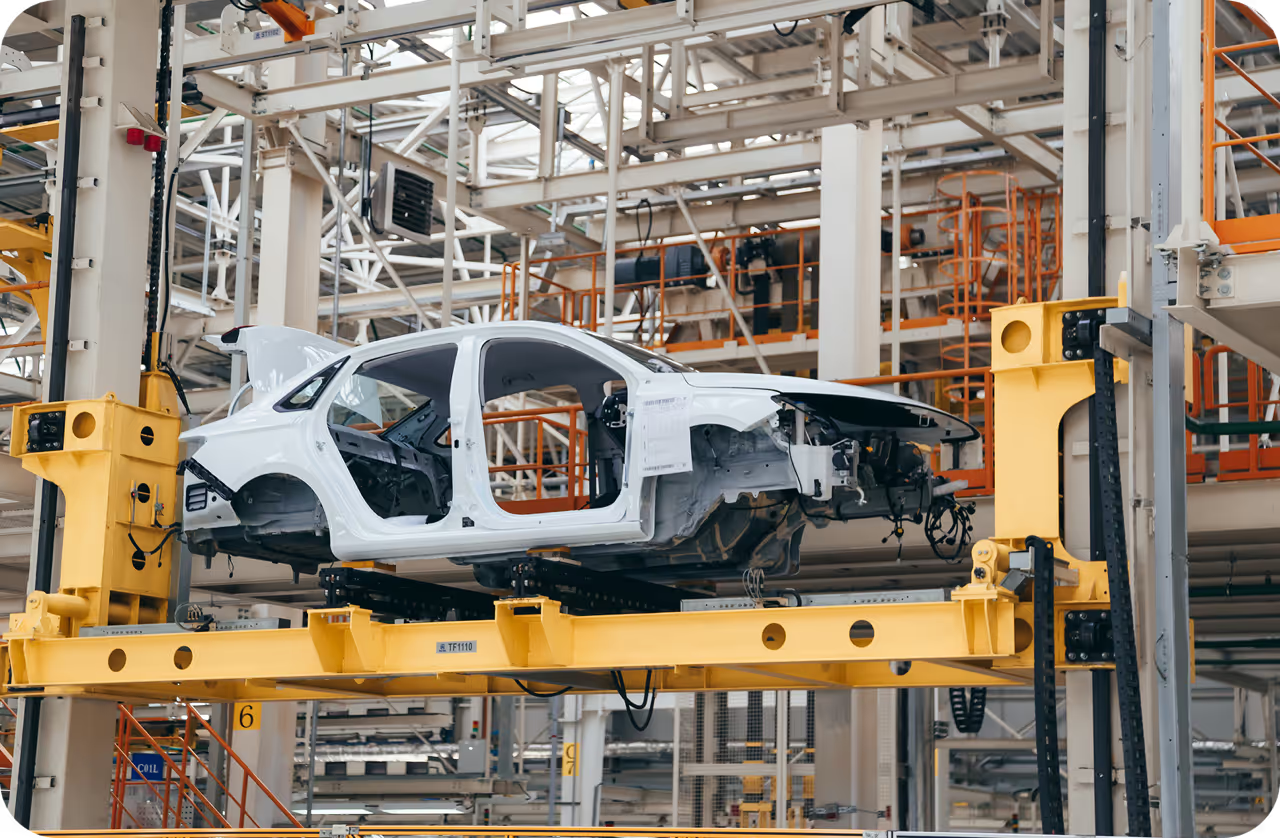
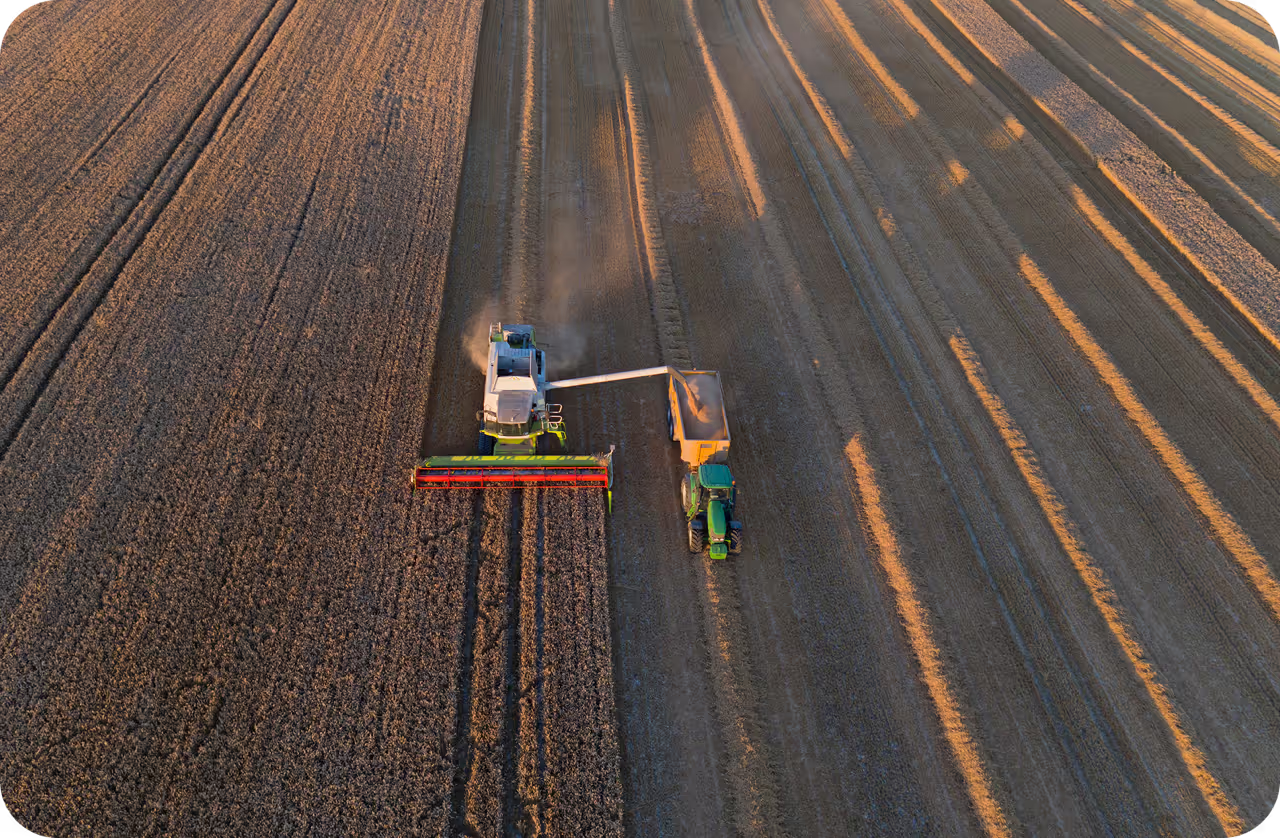
Chef Robotics uses Ultralytics YOLO to cut food giveaway by 67%

Explore how Chef Robotics uses Ultralytics YOLO models for precise food assembly.

Flexible enterprise licensing
Go from prototype to production with Ultralytics YOLO26. Full commercial rights, one license.
Problem
Chef Robotics set out to automate high-mix food assembly, a process made challenging by the variability of ingredients and the complex, often hard-to-perceive environments found in food production facilities.
Solution
By using Ultralytics YOLO models, Chef Robotics achieves highly accurate detection of trays and ingredients on production lines, reaching around 99.5% accuracy.
Large-scale food assembly automation involves many moving parts. A high volume of trays moves along the line, ingredients vary throughout the day, and no two scoops are exactly the same. These factors make it challenging to maintain consistency, and manual assembly processes can struggle with detection, portioning, and placement.
Chef Robotics helps solve these challenges with AI and robots. By combining robotics with AI technologies like computer vision, Chef enables its robots to see and understand their environment. For instance, Ultralytics YOLO models are used for tray and ingredient detection and segmentation, allowing robots to pick and place items with sub-centimeter precision on high-mix, fast-paced production lines.
Link to this sectionScaling food production using robotics and AI#
Chef Robotics, based in San Francisco, builds AI-powered robotic systems to help the food industry keep up with growing production demands. They focus specifically on the food sector because it faces the largest labor shortage in the United States, with more than 1.1 million unfilled jobs.
This shortage makes it difficult for manufacturers to maintain output and consistency. To address these concerns, Chef robots use machine learning and computer vision to interpret production environments and make decisions in real time. Simply put, it means they can handle different ingredients, tray types, and meal formats accurately.
Today, Chef has deployed its systems across over a dozen cities in North America, helping food producers manage high volumes, reduce reliance on manual labor, and maintain consistent quality on fast-paced lines.
Link to this sectionThe precision gap in large-scale food assembly#
Producing meals at scale requires accuracy and speed, but real production environments make that difficult. Ingredients can look different throughout the day, trays may be transparent or reflective under bright lights, and conveyor lines move quickly.
These constant shifts make it hard for workers to judge placement precisely, especially when they repeat the same motions thousands of times per shift. As a result, manual assembly often leads to inconsistent portions, occasional spillover, and trays falling outside target weights.
This increases food giveaway, requires extra cleanup, and creates variability in presentation. The challenge becomes even more demanding in high-mix environments where recipes change frequently, and each product has its own handling requirements.
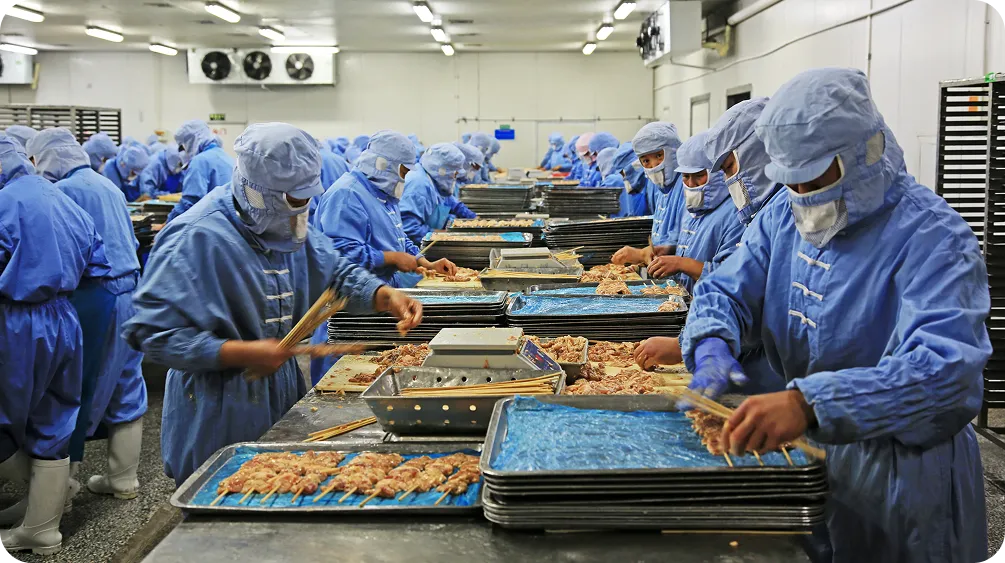
Fig 1. A look at manual food assembly lines.
Traditional automation systems aren't designed for this level of variability. They struggle with ingredient changes, rapid changeovers, and a wide range of SKUs (stock keeping units). Many producers still rely heavily on manual labor, even as staffing shortages make it harder to keep lines running.
For example, Cafe Spice, an Indian food brand and co-manufacturer based in New Windsor, NY, faced these challenges daily. Their team assembled meals by hand at about twelve trays per minute, which limited output as demand increased.
Also, their two-compartment trays required precise placement to prevent curry from spilling into the rice section - something manual processes and conventional equipment often struggled to maintain consistently. Recognizing these constraints, Cafe Spice turned to Chef for a more flexible and reliable approach.
Link to this sectionUsing Ultralytics YOLO models to analyze food assembly lines#
To automate Cafe Spice’s high-mix meal production, Chef deployed a robotic AI system that can detect trays, identify ingredients, and place food with the precision required for their two-compartment trays. At the center of this system is a Vision AI pipeline built on Ultralytics YOLO models.
Ultralytics YOLO models support key computer vision tasks such as object detection, oriented bounding box (OBB) detection, instance segmentation, and image classification. These capabilities give Chef robots real-time awareness of the production line.
Since Cafe Spice produces many different SKUs, Ultralytics YOLO models are custom-trained on images collected directly from their production environment. This helps the robots interpret ingredients under real factory conditions.
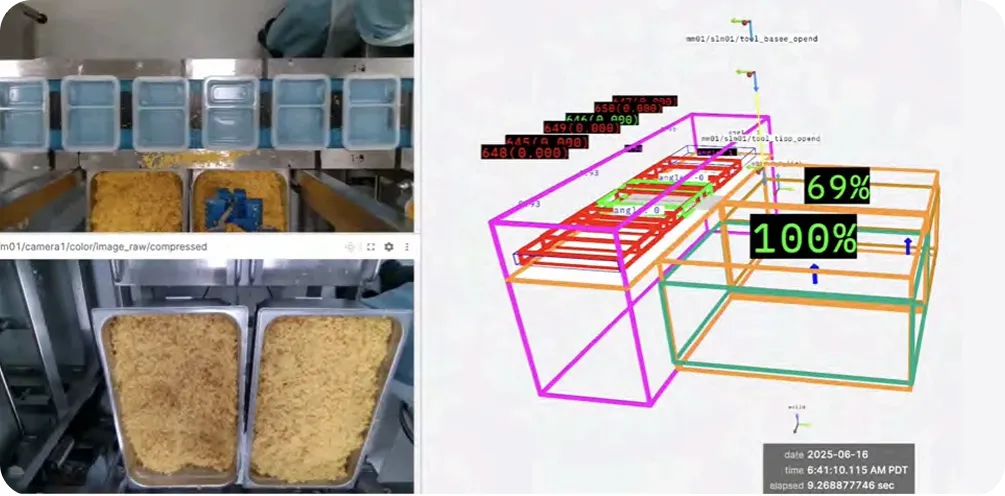
Fig 2. How the Chef robot sees and detects trays (Source)
In particular, YOLO is used to detect trays as they move down the conveyor and identify the correct compartment for each ingredient. Taking object detection a step further, OBB detection lets the system understand items that appear at different angles, including bowls, transparent inserts, and trays with shifting orientations.
Link to this sectionWhy choose Ultralytics YOLO models?#
Ultralytics YOLO models give Chef the speed and accuracy needed for real-time food assembly on fast-moving production lines. They have found that Ultralytics YOLO models deliver roughly 99.5% accuracy in production, providing the stable detections required for sub-centimeter robotic placement across different trays, bowls, and ingredient types.
Also, the Ultralytics Python package provides the tools to train, fine-tune, and manage these models, making it easy for engineering teams to iterate quickly. For instance, it supports export formats like ONNX for cross-platform deployment, which allows Chef’s team to convert and deploy models seamlessly across their robotic systems.
Link to this sectionChef Robotics and Ultralytics YOLO double Cafe Spice’s output#
After integrating Chef’s AI-enabled robotics systems driven by Ultralytics YOLO models, Cafe Spice saw immediate and measurable improvements across output, labor efficiency, and product quality. Their production lines, which previously operated at 12 trays per minute, now run at an average of 30 trays per minute, with peak rates reaching 40 trays per minute on the updated conveyor system. This represents a two to three times increase in output.
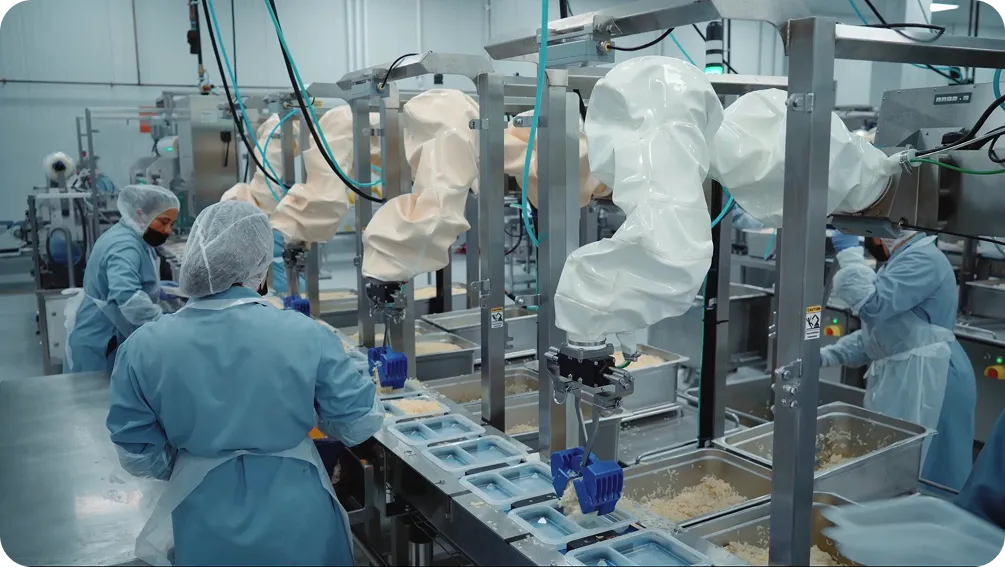
Fig 3. Cafe Spice’s meal production line, powered by Chef Robotics and Ultralytics YOLO.
Labor productivity improved as well. Each line historically required 8–10 workers, but Chef’s robots reduced that number to 3–4 workers per line, resulting in a 60% increase in labor productivity. The freed capacity helped Cafe Spice redeploy staff to other areas that had been consistently understaffed due to ongoing labor shortages.
Similarly, quality and yield also saw significant gains. Before automation, food giveaway, largely caused by over-portioning to avoid underweight rejects, sat at 9.19%. With robots using YOLO-based detection to place ingredients accurately, giveaway fell to 3.05%, a 67% reduction. In addition to this, acceptance rates improved as well: 91% of robot-assembled trays met Cafe Spice’s quality standards, compared to 75% for manually assembled trays.
Link to this sectionMaking large-scale meal production smarter and more precise#
As Chef continues to expand, the company is focused on making its AI-powered systems even more adaptable to the wide variety of ingredients, trays, and production setups used across the food industry. A key driver behind these efforts is Chef’s mission to build intelligent machines that empower humans to do what humans do best. By advancing its perception models, simplifying changeovers, and enhancing flexibility for high-mix production, Chef is creating automation that operates less like a rigid machine and more like a collaborative teammate.
Interested in exploring Vision AI? Discover our licensing options to bring computer vision to your projects. Visit our GitHub repository and join our community. Explore AI in healthcare and computer vision in retail on our solution pages.