SiteAssist improves site safety by processing 770K+ images with Ultralytics YOLO
%20(1).svg)
Learn how SiteAssist leverages Ultralytics YOLO models to improve construction site safety.
Flexible enterprise licensing
Go from prototype to production with Ultralytics YOLO26. Full commercial rights, one license.
Problem
SiteAssist needed a reliable way to verify safety compliance across large construction sites, where manual image checks were slow, inconsistent, and often unreliable.
Solution
Using Ultralytics YOLO models, SiteAssist automated image verification, enabling real-time detection of compliance issues and streamlining safety workflows across thousands of users and various sites.
Construction sites involve high-risk activities like lifting operations and hot work, where teams need to follow strict safety procedures before work begins. To confirm these checks, workers usually upload photos as proof through digital workflows.
However, reviewing these images isn't always straightforward. They can be unclear, incomplete, or sometimes misleading, making it difficult to know if safety requirements have actually been met, especially during large projects.
SiteAssist supports these workflows through its digital platform, using a combination of tools and AI. In particular, computer vision models like Ultralytics YOLO models are used to analyze uploaded images, helping the platform understand what is happening on site, flag invalid submissions, and highlight potential issues. This reduces manual effort and enables teams to maintain consistent safety standards.
Link to this sectionImproving safety and compliance on construction sites using AI#
SiteAssist is a control-of-work platform designed for teams managing high-risk activities across construction, infrastructure, and other critical industries. It replaces complex, paper-based processes with structured digital workflows, supporting tasks such as excavation, hot work, lifting, and confined-space operations.
Companies like Balfour Beatty, Taylor Woodrow (VINCI), Skanska, and HG Construction use SiteAssist to improve consistency, maintain compliance, and keep projects running smoothly. By digitizing permits and workflows, the platform helps teams identify potential risks and ensure that safety requirements are applied consistently.
Today, SiteAssist supports thousands of workers, giving teams clearer insight into day-to-day operations. Having this improved visibility gives teams greater control over safety processes.
Link to this sectionWhy construction safety checks break down at scale#
Keeping construction sites safe and running smoothly isn’t simple. Large projects often involve thousands of workers operating across multiple locations, each carrying out high-risk tasks that require strict safety checks before work begins.
To verify that these checks have been completed, workers are typically required to upload photos as proof into digital workflows or permit systems. But reviewing these submissions isn’t always straightforward.
Images can be unclear, incomplete, or sometimes misleading, making it difficult to confirm whether safety requirements have actually been met. Approvers have to manually check each submission, looking for the correct equipment, proper setup, and overall compliance.
As the number of submissions increases, this process becomes more time-consuming and harder to manage consistently. At the same time, many projects still rely on paper-based permits or partially digitized workflows.
This slows down approvals, creates bottlenecks, and limits real-time visibility into site activities. Teams may need to follow up in person or repeat checks, which adds further delays.
As operations scale, these challenges make it harder to maintain consistent safety standards and increase the risk of missed or delayed checks.
Link to this sectionEnabling robust safety checks with Ultralytics YOLO models#
SiteAssist simplifies safety checks by combining permit workflows with real-time image verification. Instead of relying on manual reviews, teams can capture and upload images directly from the field, with each submission validated before approvals proceed. This helps ensure safety checks happen consistently, even in changing conditions.
Behind the scenes, each uploaded image is analyzed using Ultralytics YOLO models, leveraging vision tasks like object detection and image classification to understand what is present on site.
Models like Ultralytics YOLO26 have been fine-tuned on SiteAssist’s own datasets, built from images collected across real construction sites through its platform. This includes around 45 construction-related objects, such as fire extinguishers, safety gear, gas canisters, and common power tools and machinery.
The system identifies these objects and checks whether required items are visible, flagging anything that is missing or doesn’t meet the expected criteria. It can also highlight invalid submissions, such as images that aren’t taken in real site conditions. Across these submissions, an average of 1.7 objects per image is detected, rising to 2.7 when excluding background images, highlighting the density of meaningful activity on site.
Here are a couple of examples of how Ultralytics YOLO models are used within SiteAssist:
- Validating live images: The system can detect when an uploaded image isn’t taken in real conditions, such as a photo of a screen, and flag it for review.
- Detecting and counting equipment: The system can identify required items, such as fire extinguishers, and check whether the correct number is present. In some cases, optical character recognition (OCR) is used alongside YOLO to extract text from images, such as reading labels to determine the type of equipment.
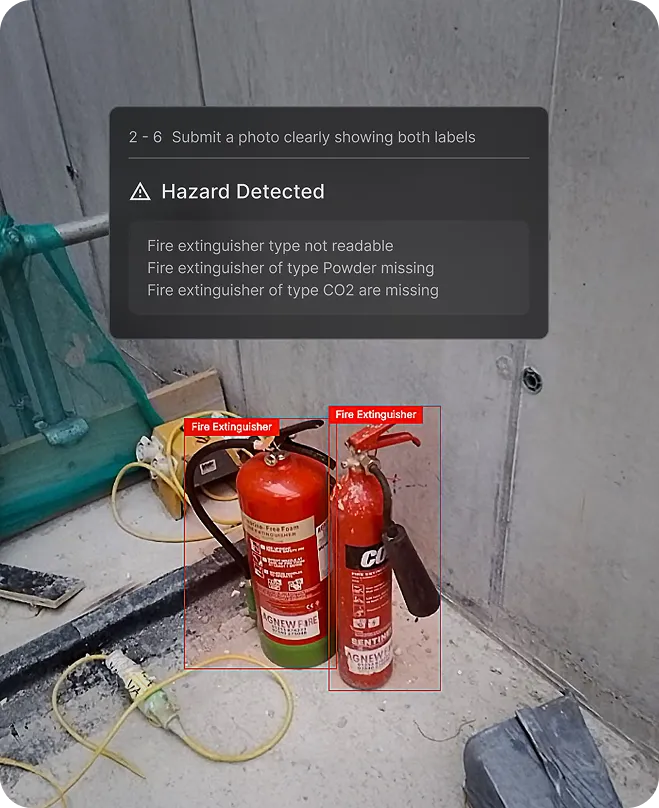
Fig 1. Detecting fire extinguishers using Ultralytics YOLO models on SiteAssist (Source)
Link to this sectionWhy choose Ultralytics YOLO models?#
Ultralytics YOLO models provide the speed and accuracy SiteAssist needs for real-world image validation. Images can be processed quickly as they are uploaded, making it easier to run safety checks without delays.
In fact, since January 2025, SiteAssist has processed over 770,918 images using Ultralytics YOLO models, detecting more than 1,302,315 objects and demonstrating reliable performance at scale.
The Ultralytics Python package also makes it straightforward to train and fine-tune models using data collected from real site workflows. This means model performance can keep improving as more data is captured over time.
From a deployment perspective, YOLO models are efficient and flexible. SiteAssist currently processes images in the cloud as part of its backend, handling uploads from workers’ devices in real time. At the same time, the models can also run locally on devices, making it possible to support future use cases where processing happens directly on site.
Beyond this, with support for export formats like ONNX and ExecuTorch, the Ultralytics YOLO models can be integrated into different edge systems without adding complexity. This gives SiteAssist a practical and scalable way to build and expand its vision AI workflows.
Link to this sectionSiteAssist and Ultralytics YOLO boost real-time safety checks#
As of now, SiteAssist supports around 12,000 active users on approximately 4,000 devices, enabling safety workflows to scale efficiently for large, complex projects.
By introducing automated image verification, teams have reduced reliance on manual reviews and sped up approval processes. Tasks that previously required repeated checks can now be validated more quickly, helping work start on time and reducing delays.
YOLO-powered image analysis has also improved consistency in how safety checks are carried out. Submissions are evaluated in a more structured way, making it easier to identify missing equipment, artificial images, or incomplete checks. The most commonly detected objects, since January 2025, include over 283,000 vehicles and more than 201,000 people, as well as nearly 68,500 artificial images and over 55,000 fire extinguishers.
This gives site managers clearer visibility into ongoing work and greater confidence that safety requirements are being met.
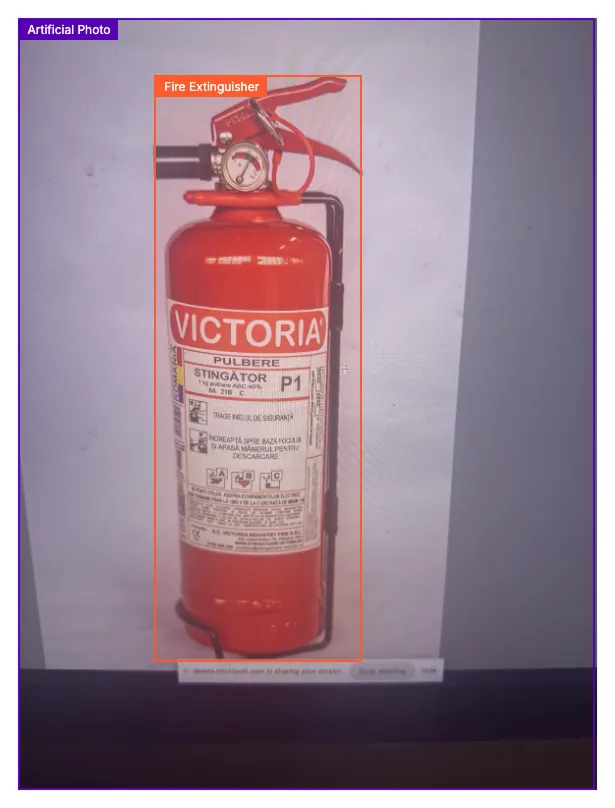
Fig 2. An example of an artificial photo detected by SiteAssist using Ultralytics YOLO.
On top of this, reducing manual paperwork has made it possible for teams to spend less time on administrative tasks and more time on-site. As a result, operations run more smoothly, and safety processes become more reliable across different locations.
Link to this sectionBringing vision-driven construction safety workflows to the edge#
Looking ahead, SiteAssist is exploring edge AI to run Ultralytics YOLO models closer to where data is captured on site. By processing images directly on devices, the team aims to reduce cloud costs, improve data privacy, and support real-time decision-making. They plan to continue expanding these capabilities to enable more advanced, real-time safety and operational workflows.
Want to bring vision AI into your operations? Join our community and learn about applications like AI in healthcare and vision AI in agriculture. Visit our GitHub repository and discover licensing options to get started today!